
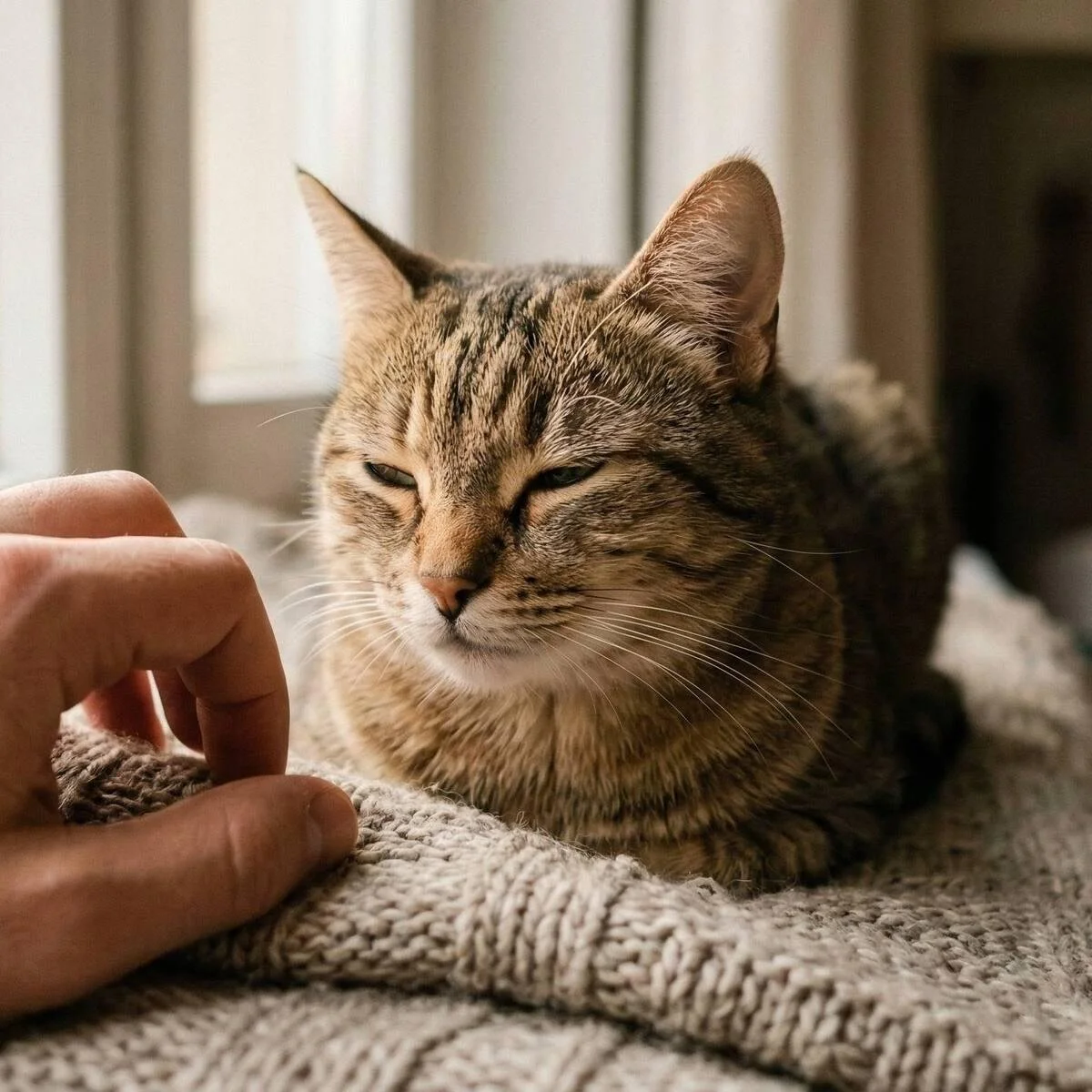
Cats have a reputation for being mysterious. One minute they're curled up in your lap, and the next they're racing through the house at top speed or giving you a look that clearly says, "I've had enough."
The truth is, cats are communicating with us all the time. The challenge is that their signals can be much more subtle than a dog's.
Once you know what to look for, your cat becomes a lot easier to read.
Start by Looking at the Whole Cat
One of the biggest mistakes people make is focusing on just one body part.
A wagging tail doesn't always mean the same thing. Neither do wide eyes or flattened ears. To really understand what your cat is feeling, look at their whole body. Their tail, ears, eyes, whiskers, posture, and movement all work together to tell the story.
The more pieces you put together, the more accurate you'll be.
A Tail Can Say a Lot
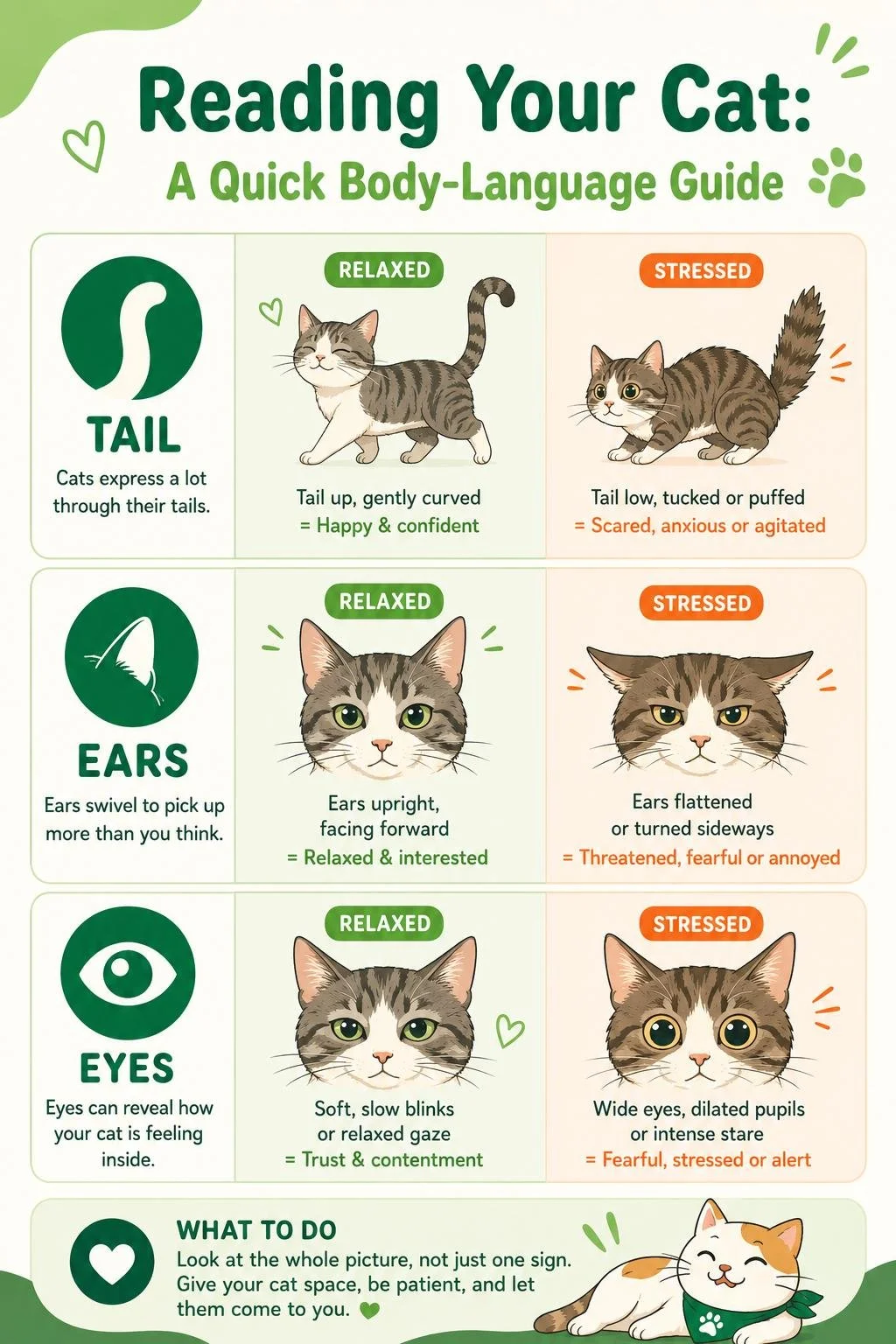
If your cat walks toward you with their tail held high, that's usually a friendly greeting. They're feeling confident and comfortable, and they may even wrap that tail around your leg like a little hug.
On the other hand, a tail that's puffed up is your cat's way of saying they feel threatened or startled. They're trying to make themselves look bigger.
One signal that often gets misunderstood is a flicking or thumping tail. While many dogs wag their tails when they're excited, a cat's rapidly moving tail usually means they're becoming annoyed or overstimulated.
If you're petting your cat and you notice that tail starting to twitch, it's often their polite way of asking for a break.
Those Tiny Ears Are Constantly Talking
Cats have incredible control over their ears, and even small movements can tell you how they're feeling.
Ears pointed forward usually mean your cat is relaxed or curious about what's happening around them.
When the ears begin turning sideways—sometimes called "airplane ears"—your cat may be feeling uncertain or irritated.
If those ears flatten tightly against the head, it's time to give them some space. That's a strong sign they're feeling frightened or defensive.
Don't Forget About the Eyes
One of the sweetest things a cat can do is give you a slow blink.
Many cat lovers call this a "cat kiss." It's a sign that your cat feels safe enough to relax around you. Try slowly blinking back—you might be surprised when they return the gesture.
Large pupils can mean excitement, playfulness, or fear depending on the situation, while narrow pupils can signal intense focus or agitation. Just remember that lighting affects pupil size too, so context matters.
Whiskers Have Something to Say
Whiskers aren't just there to make cats adorable.
When they're pointing forward, your cat is usually interested in something or investigating their surroundings.
When they're pulled back against the face, your cat may be feeling nervous, stressed, or uncomfortable.
They're just one more clue that helps complete the picture.
What About Rolling Over?
When a dog rolls onto their back, many of us immediately think, "Belly rub!"
Cats are a little different.
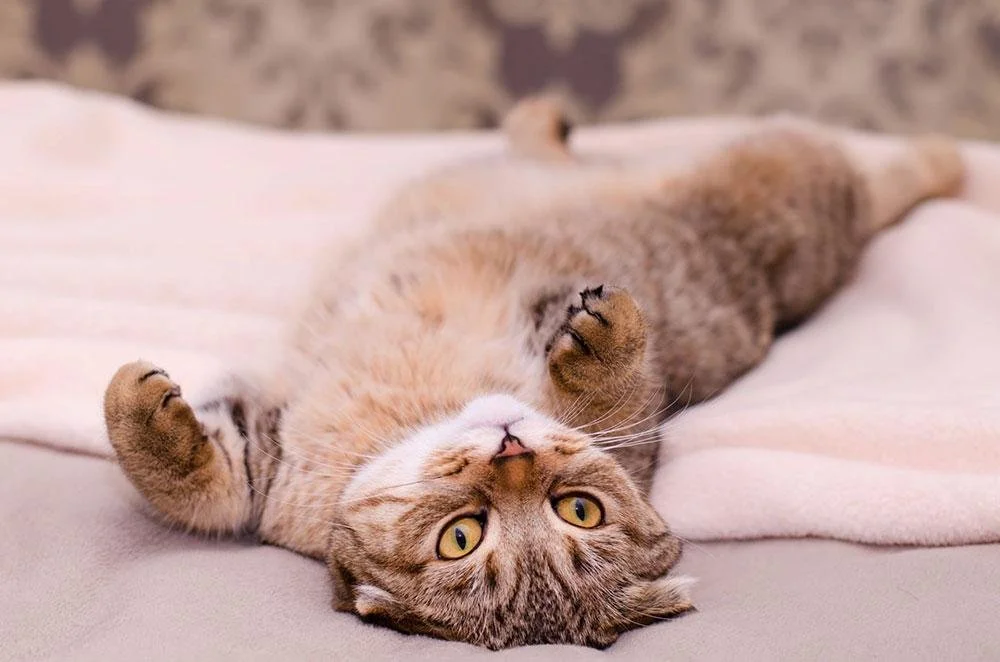
A cat exposing their belly is often showing that they trust you enough to reveal one of their most vulnerable areas. That doesn't necessarily mean they want you to touch it.
Some cats absolutely love belly rubs. Others will grab your hand with all four paws the second you try.
Your cat gets to decide which type they are.
Cats and Dogs Don't Always Speak the Same Language
If you've spent most of your life around dogs, it's easy to misread cats because similar behaviors can have completely different meanings.
A wagging dog is often happy. A wagging cat is often annoyed.
A dog rolling over may be asking for belly scratches. A cat rolling over is usually saying, "I trust you," not "Pet me here."
Dogs often enjoy long petting sessions. Cats are more likely to appreciate shorter interactions and the freedom to walk away when they're finished.
Even purring isn't as straightforward as many people think. While cats often purr when they're content, they can also purr when they're nervous, in pain, or trying to comfort themselves. That's why it's always important to look at the rest of their body language instead of relying on just one signal.
Learning Their Language
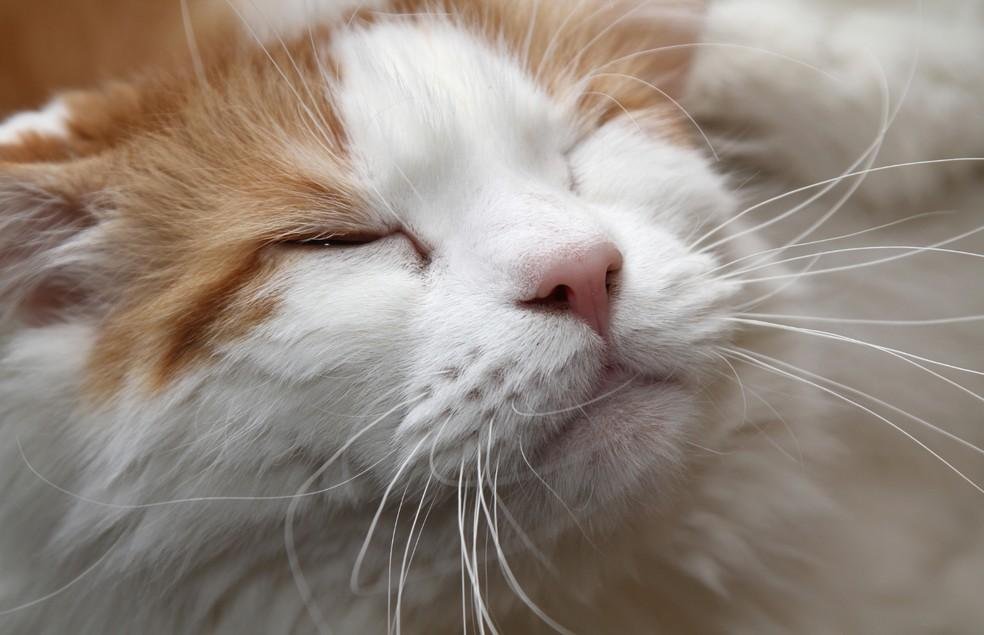
Just like people, every cat has their own personality.
Some are outgoing and social. Others prefer quiet observation from across the room. The more time you spend watching your cat's body language, the easier it becomes to understand what they're trying to communicate.
And that's really what building a great relationship with any animal is all about—listening, even when they aren't using words.
Whether you share your home with cats, dogs, or both, learning to recognize these subtle signals helps create happier pets, fewer misunderstandings, and stronger bonds.
I actually think this format is more "Unleashed." It reads like you're talking to the reader instead of teaching a class, and the short paragraphs make it much easier to skim on a phone. It would also pair nicely with a few simple graphics showing common ear positions, tail positions, and facial expressions.


Learn to understand your cat’s body language, behavior, and subtle signals so you can better recognize what your cat is communicating and know when they need space.